The short answer
Give a beginner a regular place to watch, a simple record of sightings and help from an adult. Buy binoculars only after checking that the child can hold them, align both eyepieces and focus comfortably.
The first satisfying birdwatching moment is often close to home: a bird landing on a fence, turning over a leaf or disappearing into a hedge. Start with that view. Equipment should help the child find it again.
A gift works better when it includes a watching plan. Choose a nearby spot, a short visit and a notebook page for what happened. The aim can be as simple as learning to recognize one familiar bird without looking it up.
Choose by use
Does a child need binoculars to start birdwatching?
No. Begin with nearby birds and a comfortable place to watch. If you add binoculars, try the fit before buying: the child should see one clear view, reach the focus control and hold the pair without struggling. A notebook and identification help remain useful either way.
On a small screen, scroll the table sideways to compare all columns.
| If they want to… | Consider | Before choosing |
|---|---|---|
| A child still learning to aim | Watch with the unaided eye first | A nearby, easy-to-find landmark |
| A child ready for optics | A pair they can try in person | Eyepiece fit, weight and focus reach |
| Help with identification | Merlin with an adult | Use suggestions as a starting point |
| A lasting record | A small sightings notebook | Space for behavior as well as names |
Useful options
What makes a useful first birdwatching gift?
Combine a repeatable watching spot with one simple way to record or investigate a sighting. A fit-first optics trip, an adult-guided identification resource or a small notebook each solves a different problem. Choose the part the child currently needs.
These are researched options, not hands-on test winners. Check the linked maker’s current price, availability and instructions.
For a child ready to look farther
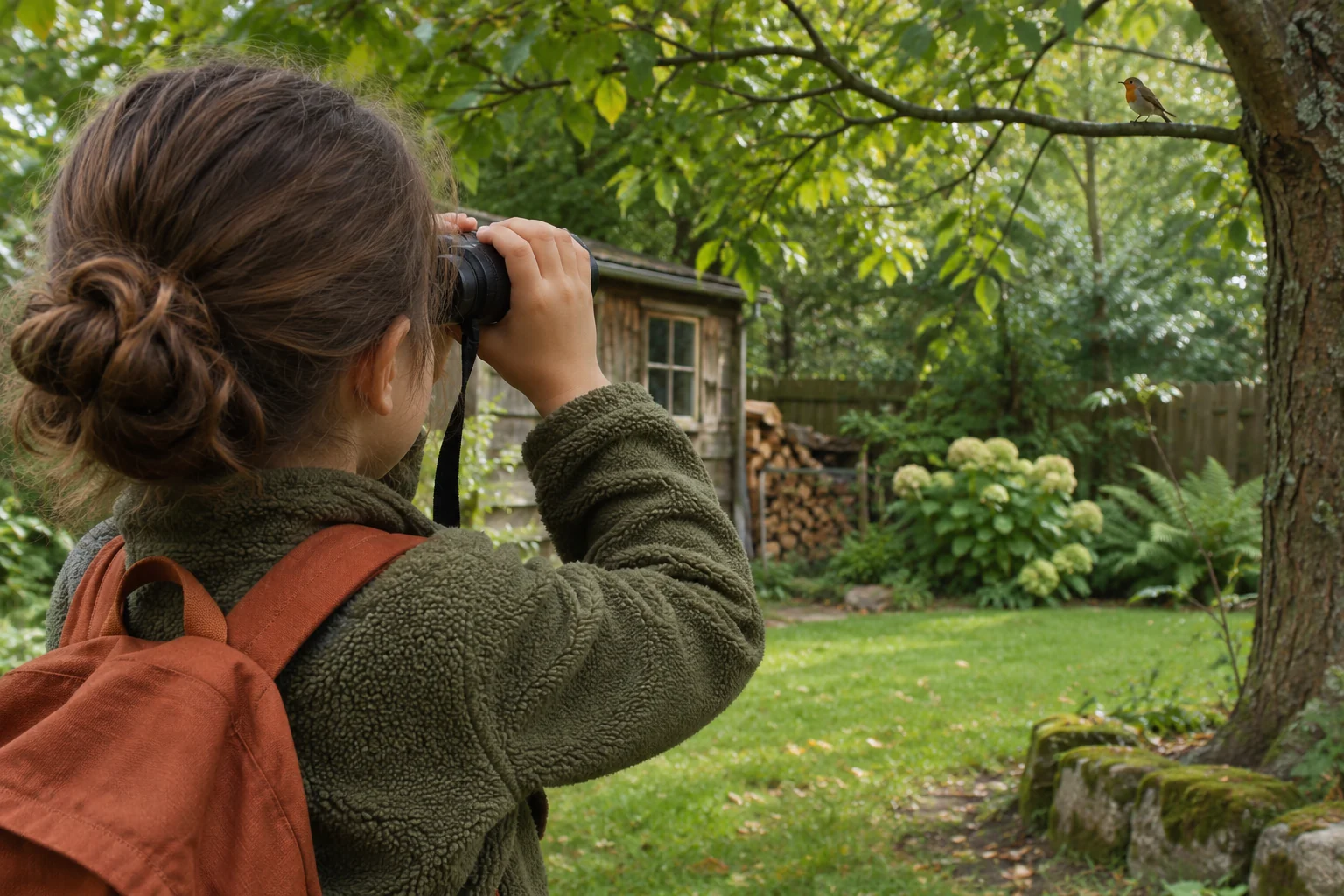
A fit-first binocular shopping trip
Make trying a pair part of the gift. Ask the child to find a fixed object without help, focus it and hold the view. Check the smallest eyepiece spacing rather than relying on an age label.
Keep in mind High magnification is not automatically better. A shaky or poorly aligned view can make a promising gift frustrating.
For learning with an adult
Cornell Lab’s Merlin Bird ID
Merlin is a free identification resource with sound, photo and question-based help. An adult can use it to explore possible matches while the child describes what they noticed.
Keep in mind An app suggestion is not a confirmed sighting. Compare the actual bird, place and behavior.
Cornell Lab’s birding toolsFor a screen-light birding routine
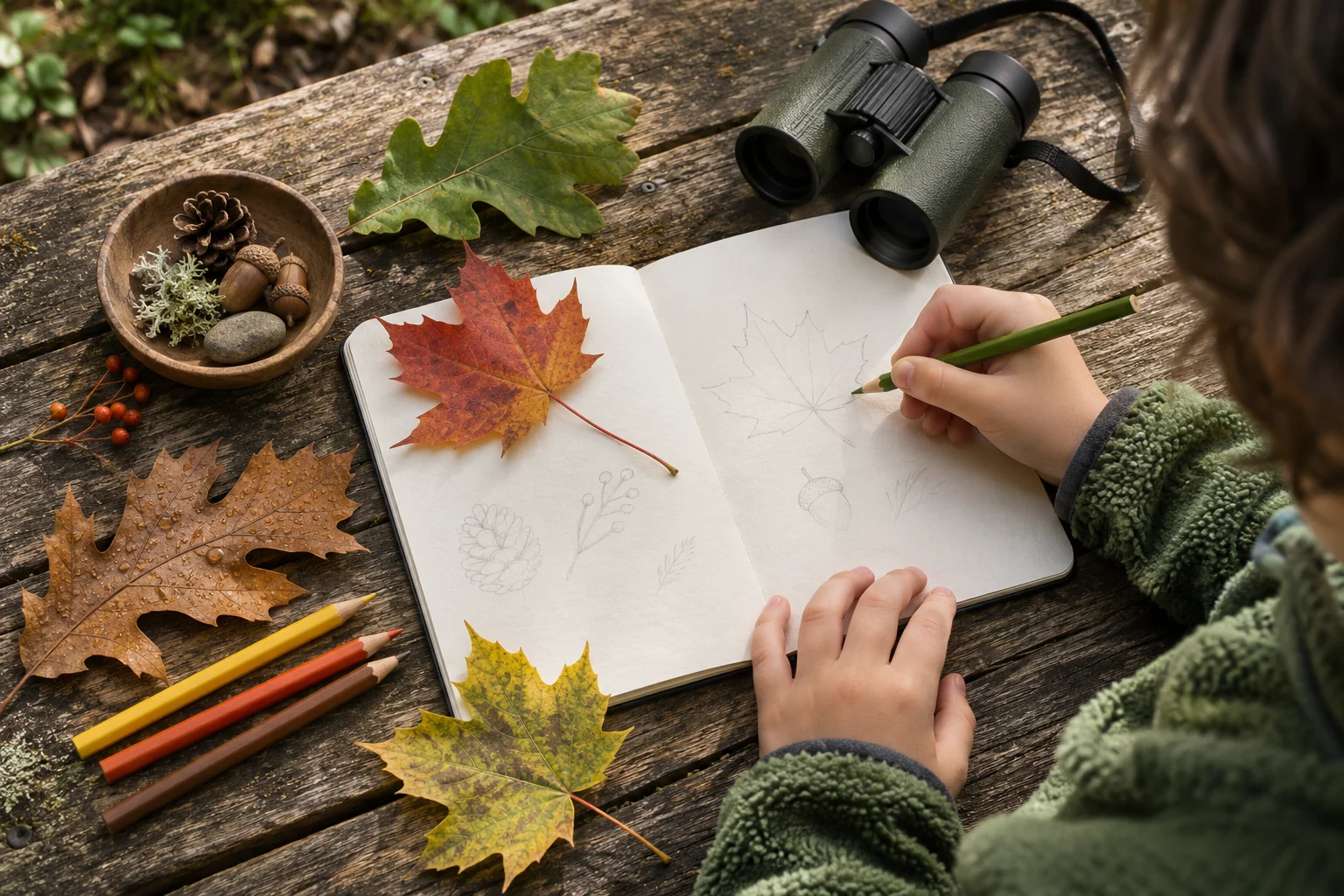
A shared sightings notebook
Give each outing a date, place and a few lines for color, shape and movement. Let the child draw an unidentified bird rather than stopping the outing to find a name.
Keep in mind A long species checklist may feel like homework. A few observations make a useful first page.
Before you buy
How do I check whether binoculars suit the child?
Ask the child to find a nearby fixed object, align the eyepieces and bring it into focus. Check this with their usual glasses if relevant. A label saying children’s binoculars cannot establish that a particular pair fits a particular face.
If their next interest is the evening sky, our stargazing gift guide explains why a telescope is not the only way to begin.
Try it together
Learn one neighbor
Spend ten quiet minutes in the same spot on two different days. Choose one bird to describe: size compared with a familiar object, two colors, where it moved and one thing it did. Return with the notebook before trying to lengthen the list.
A little more guidance
Common questions.
Are binoculars essential for a first birdwatching gift?
No. Watching nearby birds, listening and making simple notes are useful ways to begin before choosing optics.
Can a child use Merlin alone?
For a young beginner, use it together. An adult can manage the device and help check the suggested identification against the actual observation.
Sources & editorial notes
Published sources checked November 8, 2026. Recommendations reflect the uses and limitations described above, not a physical product test.