The short answer
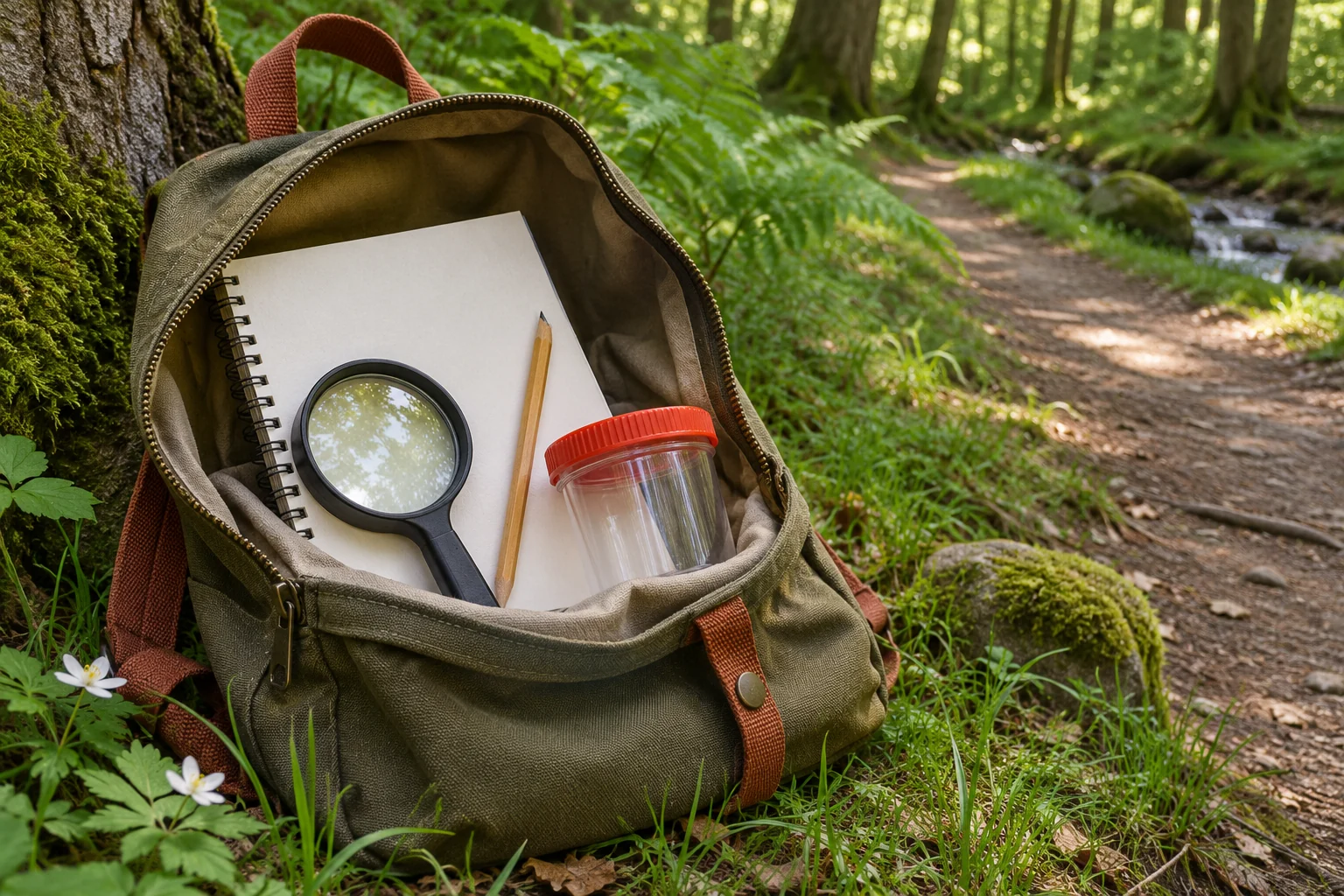
A useful starter kit needs a way to look closely, a way to record observations and a bag the child can manage. Check each included tool instead of judging the kit by its piece count.
A brightly packed kit can make a generous-looking present. Its real test comes after the box is opened: can the child do something with the tools in a place they can actually visit? Start there, then decide whether a ready-made set or a small bag assembled at home is the better fit.
Our preference is a focused kit with a clear first use. A magnifier and notebook suit a garden survey. A birding kit needs comfortable optics. A science experiment box belongs to a different activity, even if there are leaves on the packaging.
Choose by use
What should a children’s outdoor exploration kit include?
For a first garden or park visit, a magnifier, notebook and manageable bag are enough. Add tools only for a defined activity. A set for observing birds, a set for loose natural materials and a prepared-slide microscope support different tasks and should be compared separately.
On a small screen, scroll the table sideways to compare all columns.
| If they want to… | Consider | Before choosing |
|---|---|---|
| Explore a garden or park | Magnifier + notebook + small bag | Child can carry and repack it |
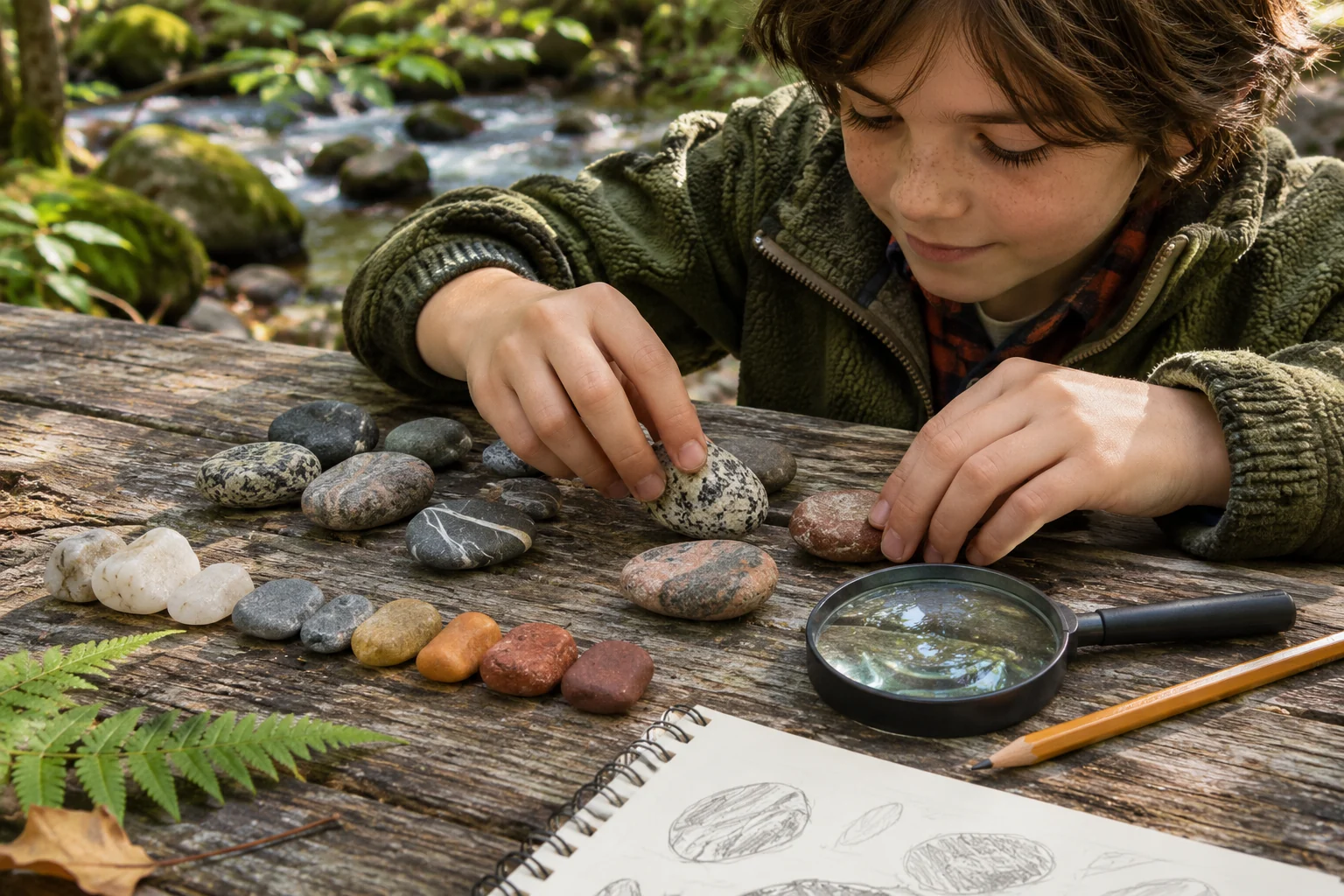
| Handle permitted loose finds | Magnifier and easy-grip tweezers | No need to handle living creatures |
| Follow an activity | A booklet for a specific place | The route and tasks fit the child |
| Observe wildlife | Distance and patience | A container is not required |
Useful options
Should I buy a ready-made kit or make my own?
Choose a ready-made set when its specific tools and instructions match an activity you will do. Build your own when you already have some supplies or want to avoid unused accessories. Either approach works best with a clear first task and an easy place to repack the tools.
These are researched options, not hands-on test winners. Check the linked maker’s current price, availability and instructions.
For a compact tool pair
Learning Resources Magnifier & Tweezers
The Primary Science pair combines a stand-equipped magnifier with easy-grip tweezers. The manufacturer lists it for ages three and up. Add your own notebook rather than paying for a large accessory count.
Maker specification checked November 8, 2026: ages 3+; 4.5× magnifier with a stand.
Keep in mind Use the tweezers for suitable loose materials. A label aimed at young children does not make every outdoor object safe to handle.
Learning Resources product detailsFor a kit with a clear purpose
Build a field bag from things you own
Use a small bag, notebook, pencil and a hand lens if you have one. Add water and appropriate clothing separately. Label a pocket for each tool so packing up is part of the activity.
Keep in mind A compass or whistle is not a substitute for an adult’s route planning or supervision.
For an outing-led gift
A Junior Ranger activity pack
Match a booklet to a planned visit. The activity gives the bag a purpose and lets the adult choose a route that suits the group.
Keep in mind Some programs are location-specific. Check current access and completion arrangements before promising a badge.
National Park Service programsBefore you buy
How can I tell whether an exploration kit will get used?
Choose a place and activity before comparing boxes. Then check whether every included tool has a role, whether the child can carry the kit and whether an adult can explain its use. A repeatable nearby outing gives the equipment a purpose after the first afternoon.
For a gift that arrives over time, compare the billing models in our nature subscription and prepaid-kit guide.
Try it together
One square of the garden
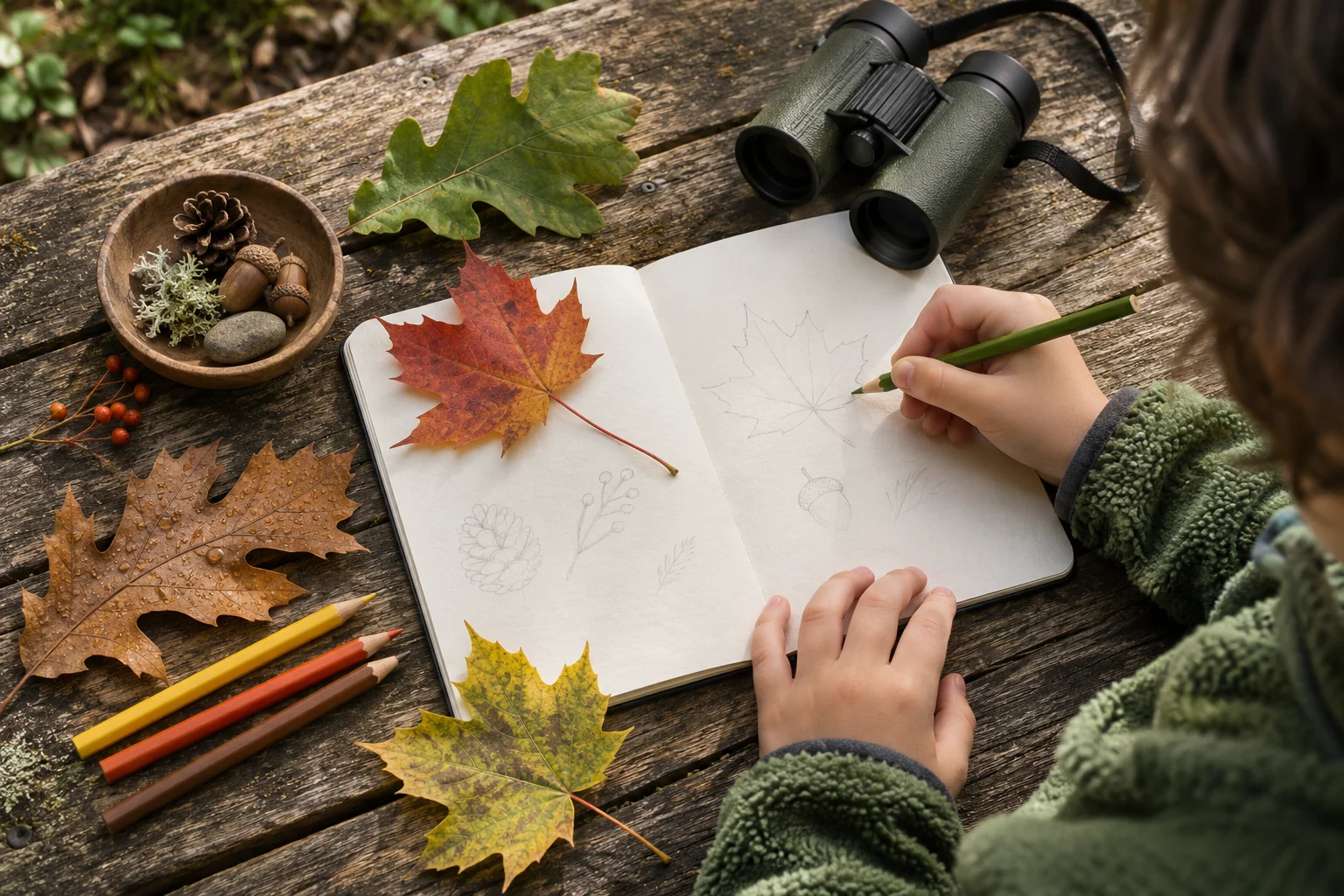
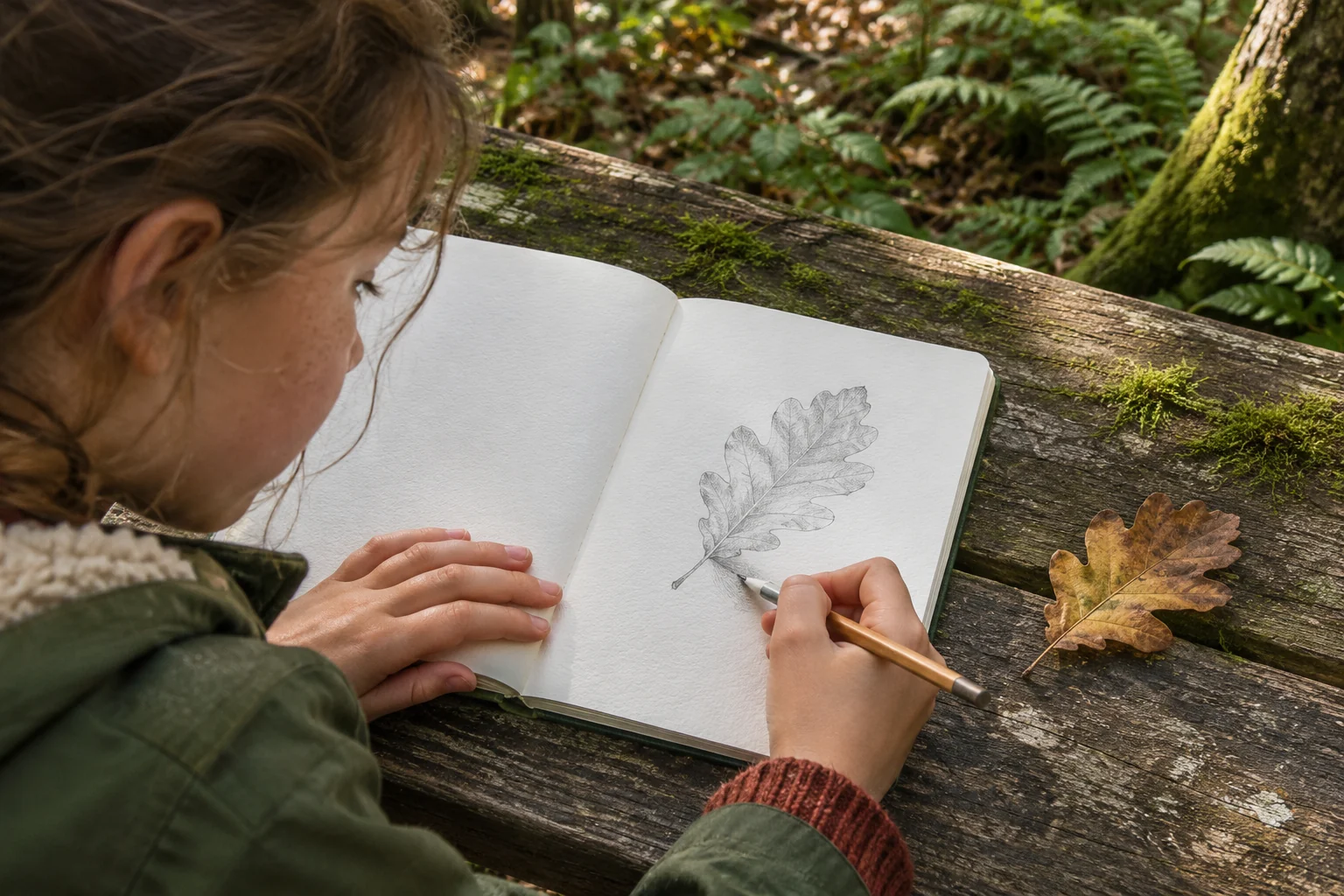
Choose a small patch beside an established path. Look from above, sketch what is visible and compare what you can see with and without a lens. Return a week later. Observe animals in place and follow local collecting rules.
A little more guidance
Common questions.
Is a larger kit better value?
Only if the included tools fit the child’s interests and work for the intended activity. Compare usable tools rather than the total number of pieces.
Should a beginner kit include a bug-catching container?
It does not need one. Looking at wildlife in place avoids the handling, heat and release problems that a container can introduce.
Sources & editorial notes
Published sources checked November 8, 2026. Recommendations reflect the uses and limitations described above, not a physical product test.